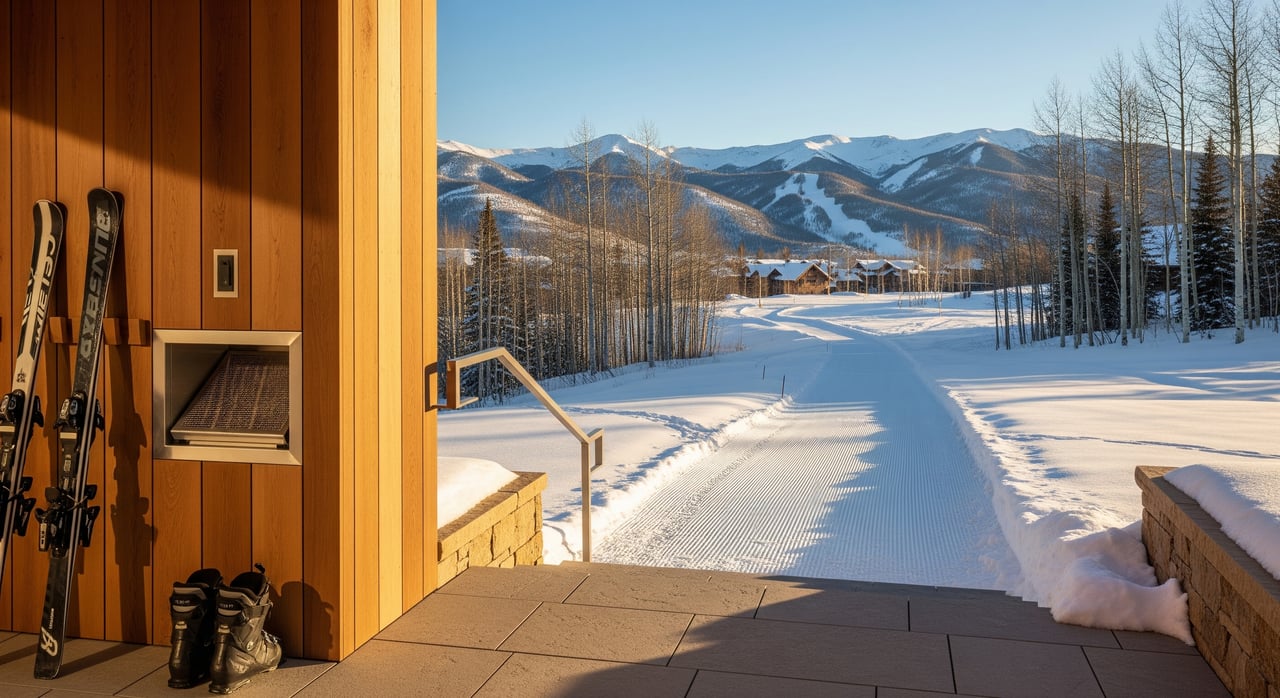
Are you seeing “ski-in/ski-out” on Deer Valley listings and wondering what that really looks like in daily life? You are not alone. In Park City, this phrase covers everything from true slopefront to a short walk or shuttle. In this guide, you will learn how to decode access types, what to verify in documents, and how ski access affects value, rentals, and your day-to-day experience. Let’s dive in.
What ski-in and ski-out mean
Ski-in means you can ski back to your property at the end of a run, often to a door, garage, or landing near the building. Ski-out means you can click in and start skiing from the property toward a run or lift. The gold standard is “true” slopefront or slope-adjacent, where the building or lot physically borders a groomed run or lift with no need to drive or take a shuttle.
Marketing term vs reality
“Ski-in/ski-out” is a marketing term, not a regulated legal label. In practice, it can describe direct slopefront, a property a short walk from a ski-way, a home connected by a recorded ski easement, or even a place that relies on a short shuttle or gondola ride. What matters for you is the exact door-to-slope path, whether an easement or HOA rule guarantees access, and the operational limits like lift hours and grooming schedules.
What “true slopefront” looks like in Deer Valley
In Deer Valley, ski-in/ski-out often implies immediate access to a groomed run, lift base, or a managed ski corridor. Many luxury buildings and homes feature private ski rooms, boot lockers, and ski gates. Still, convenience varies by micro-location and by how a specific development manages its ski-ways. A recorded easement or HOA agreement can make the difference between convenience that is guaranteed and access that depends on resort operations.
Where ski access lives in Deer Valley
Deer Valley includes multiple zones, each with a different style of access and amenities. Because Deer Valley is a skier-only resort, the on-mountain flow and ski school operations reflect that policy. As a buyer, you should match the access type to your lifestyle and guests.
Snow Park and Silver Lake convenience
Base-area properties around Snow Park and mid-mountain residences near Silver Lake tend to offer the most consistent lift proximity and public amenities. You can often step out to village corridors, lifts, and ski school facilities. Expect more activity and easier logistics for families and guests who want services close by.
Empire Pass and upper-mountain luxury
Upper-mountain pockets, including Empire Pass and similar areas, are known for luxury slopefront homes and residences that advertise direct access. Many developments in these zones feature dedicated ski corridors or lift adjacency. The exact quality of access and any deeded connections vary by project, so review recorded documents for clarity.
Perimeter communities and “walk-to” access
Some communities on the edges of the resort market “ski access” that depends on a short shuttle, a set of stairs, or a paved walk. These can still be very attractive, especially for summer use and views, but they do not function like true slopefront during peak ski days. Be sure to time the door-to-lift path during operating hours to see how it fits your routine.
How to verify your access rights
The path from your door to the slope matters, and so does the paper trail behind it. Before you buy, confirm access in recorded documents and in person.
Documents to request and review
- Title report and legal description to identify recorded ski easements or restrictions.
- Plat maps and easement exhibits that show ski corridors and boundaries.
- CC&Rs and HOA rules covering ski-gate hours, grooming, snow storage, maintenance, and rental rules.
- Deeds and any reservations of rights that grant the resort or others the ability to operate on or near the property.
Key questions about easements
- Is the easement dedicated to your specific lot or unit, or is it shared across a subdivision?
- Is it perpetual and recorded with the county, or tied to a term or agreement?
- Does it depend on resort operations, like being valid only when lifts are running?
- Who maintains and grooms the ski-way, and who carries liability?
HOA, resort agreements, and liability
Access in resort communities can be governed by HOA rules or agreements with the ski area operator rather than by a private deed. Some agreements can be modified or terminated under certain conditions, so check their recorded status and term. Confirm liability and insurance responsibilities for private ski corridors, and review any HOA insurance requirements.
Daily realities of ski-in/ski-out living
Ski-in/ski-out living is a lifestyle upgrade, but there are daily details to understand before you commit.
Seasonality and lift hours
Access is only as reliable as the resort season and daily lift operations. Early or late season conditions can limit lower-elevation ski-backs. Grooming, avalanche control, and temporary trail closures can interrupt door-to-slope convenience. Most ski access is practical only during operating hours, so plan on alternative routes outside those times.
Snow maintenance and logistics
Slopefront living means winter maintenance. Driveways, walkways, and private roads need consistent snow removal. Ask where snow is stored, how often plows come, and how HOA crews handle peak storms. Inside the home, ski storage, boot rooms, and heated garages are big quality-of-life features that also influence value.
Guests, parking, and entertaining
Guest parking may be limited in slope-adjacent communities. Some places rely on valet systems or a set number of stalls per unit. If you plan to entertain or rent, review guest parking allowances and any overflow options. Align your expectations with the HOA’s rules.
Resort activity and noise
Grooming machines, snowmaking, and lift equipment create noise and light near active slopes. Base areas are lively during peak weeks. If you want a quieter setting, you may prefer upper-mountain pockets away from lift machinery, or a layout that buffers bedrooms from slope-facing elevations.
Summer access and year-round use
Many slopefront properties enjoy summer hiking, mountain biking, and scenic value. Ask how ski-ways transition in warm months and whether trails are open to owners or the public. Understanding year-round use helps you plan for four-season enjoyment.
Value, rentals, and resale
Ski-in/ski-out commands a premium, but not all access is equal. Clarity and convenience influence both your experience and your long-term return.
Price premium and demand
Across resort markets, true slopefront and lift-adjacent homes typically achieve higher prices than comparable non-slopefront options. In Deer Valley, strong brand positioning and amenities drive consistent demand for the most convenient access. Micro-location, views, and the exact access path can create notable price gaps even within the same neighborhood.
Rental potential
Short-term rental demand is generally strong in Park City and Deer Valley. Direct slopefront properties often earn higher nightly rates, but they can also carry higher operating costs like HOA fees, insurance, maintenance, and peak-day cleaning. Confirm local regulations, HOA rental caps, and any requirements to use a specific manager before you underwrite potential income.
Resale and documentation
When you evaluate comps, compare apples to apples: true slopefront versus walk-to-lift versus shuttle access. Buyers value certainty. Recorded easements, clear ski-way maps, and well-documented resort agreements reduce perceived risk and support value at resale.
Buyer checklist before you sign
Use this practical list to keep your due diligence on track:
- Measure door-to-lift and door-to-run time and distance. Confirm if the property is slopefront, lift-adjacent, or requires a short walk or shuttle.
- Request recorded easement documents, plat maps, and legal exhibits that define the ski corridor.
- Obtain HOA CC&Rs, rules, budgets, and minutes. Search for grooming, snow storage, rental policy, and any planned assessments.
- Ask for recorded agreements with Deer Valley Resort or other third parties that relate to ski access.
- Visit during ski season to observe real-world access, lift queues, noise, and neighboring activity at peak times.
- Check municipal winter access routes and plowing for vehicles. Confirm emergency access and alternate routes if lifts are closed.
- Ask about lift operating hours, grooming schedules, and whether trails route conveniently to your property during busy periods.
- Verify insurance requirements and liability allocation for private ski-ways or slope-adjacent areas.
- If rental income is a goal, obtain historical rental statements and confirm all rental rules.
How a local, principal-led advisor helps
Deer Valley access, easements, and HOA rules vary by development. A broker who knows the micro-markets can help you benchmark door-to-lift times, read plat exhibits, and coordinate with title and HOA managers. The goal is simple: protect your convenience and your resale value by confirming that the paper trail matches the on-the-ground experience.
With principal-led guidance, you can test ski access in season, compare true slopefront to walk-to options, and weigh the tradeoffs between convenience, activity level, and year-round use. Clear documentation and a well-chosen location set you up for better ownership, stronger rental performance if desired, and a smoother resale when the time comes.
Ready to explore Deer Valley ski-in/ski-out with confidence? Schedule a free consultation with Timeless Properties to review access types, documents, and on-mountain logistics tailored to your goals.
FAQs
What does “ski-in/ski-out” mean for Deer Valley homes?
- It refers to how you reach the slopes from your door and return home. In Deer Valley, this can range from true slopefront to a short walk, easement-based corridor, or shuttle.
How can I confirm legal ski access before buying?
- Review the title report, recorded easements, plat maps, and HOA CC&Rs. Look for any resort agreements that define ski-way rights, terms, hours, and maintenance.
Will I always be able to ski back to my door in winter?
- Not always. Snow conditions, grooming, lift operations, and trail closures can limit access on certain days or during early and late season periods.
Who maintains private ski corridors near a property?
- It varies. Maintenance may be handled by the resort, the HOA, or a third party. Confirm responsibility and liability in recorded documents and HOA rules.
Does Deer Valley’s skier-only policy affect ownership decisions?
- It shapes on-mountain activity and access because snowboarding is not allowed at Deer Valley. It does not directly affect property ownership but may influence your preference.
How does ski access impact rental performance and resale?
- True slopefront and lift-adjacent homes often command higher rates and stronger demand. Clear documentation of access and well-managed ski-ways also support resale value.