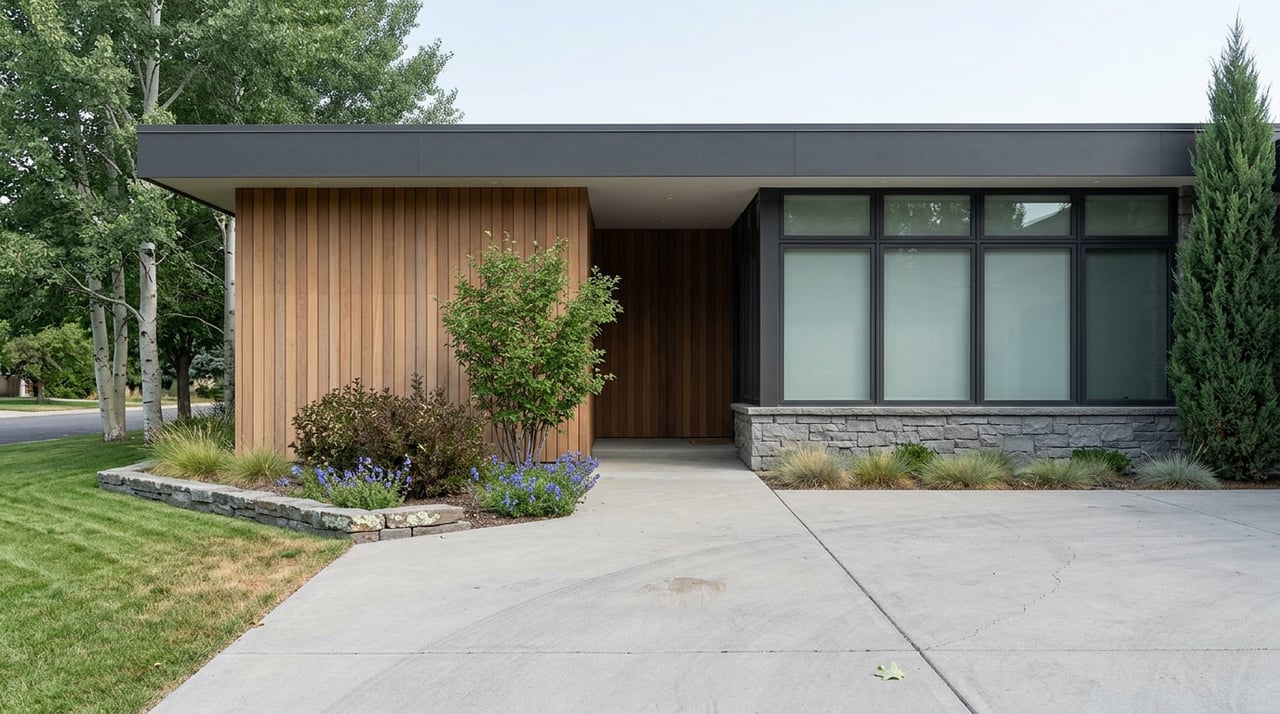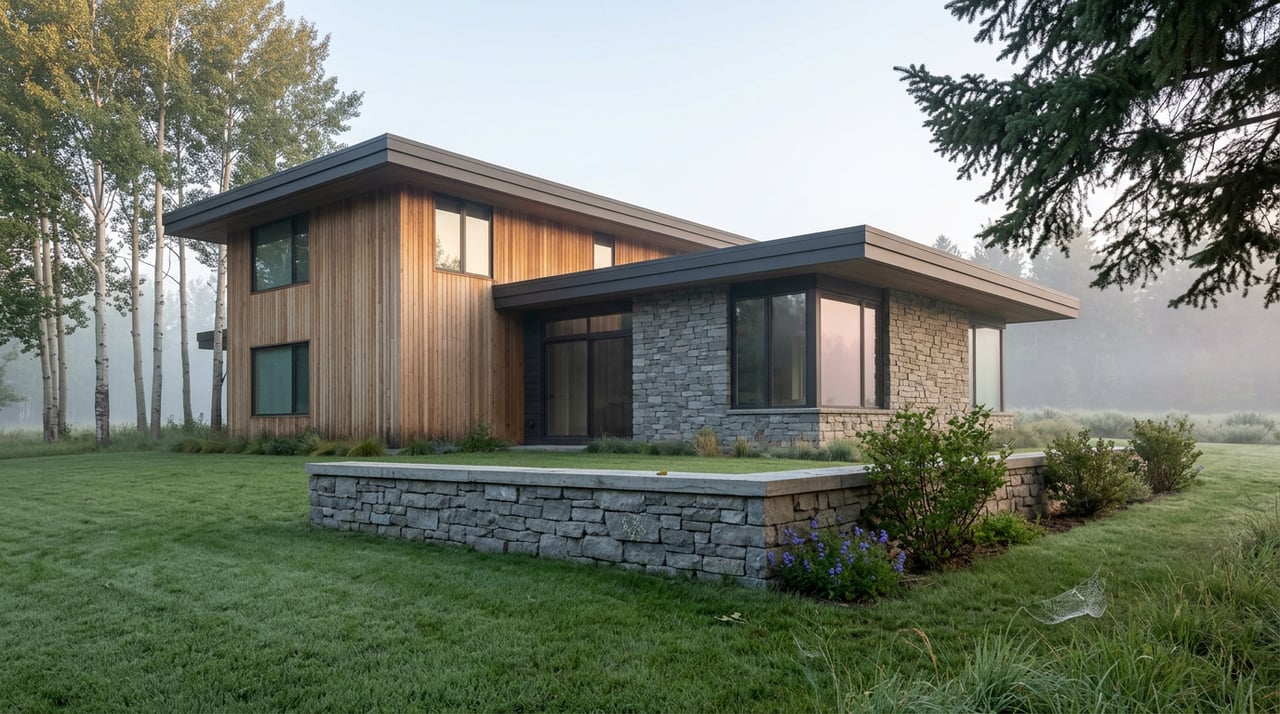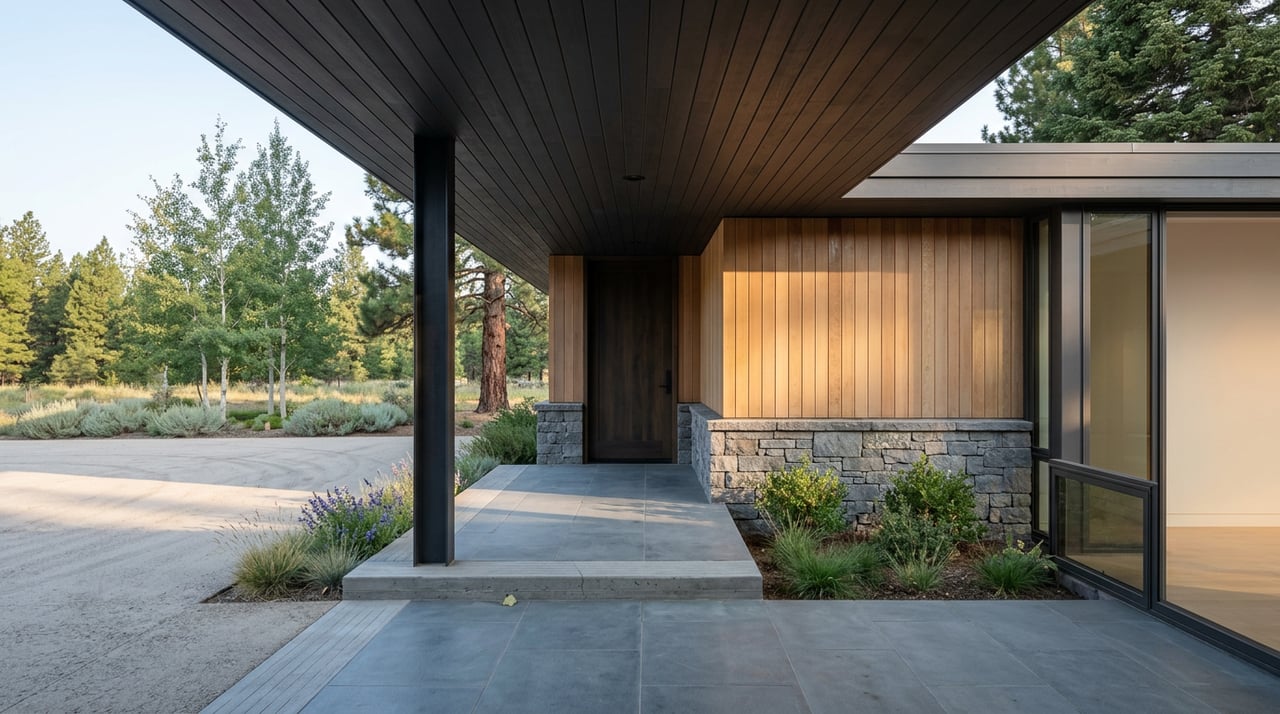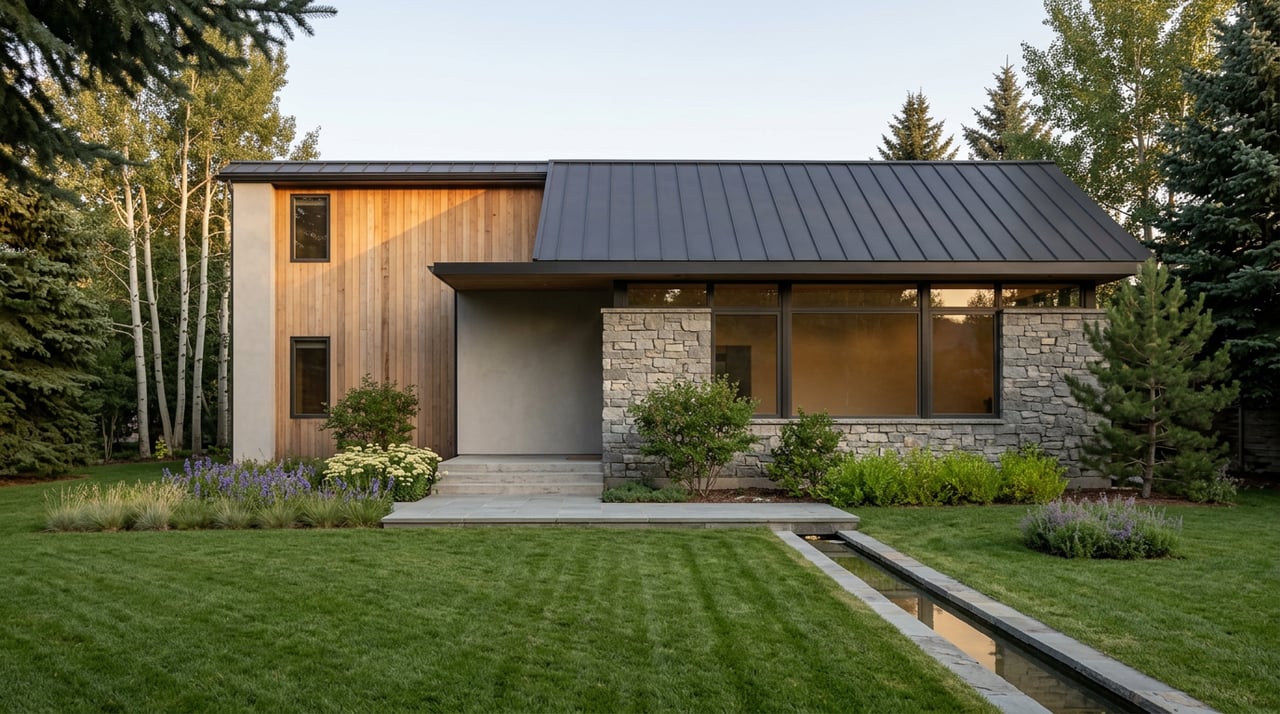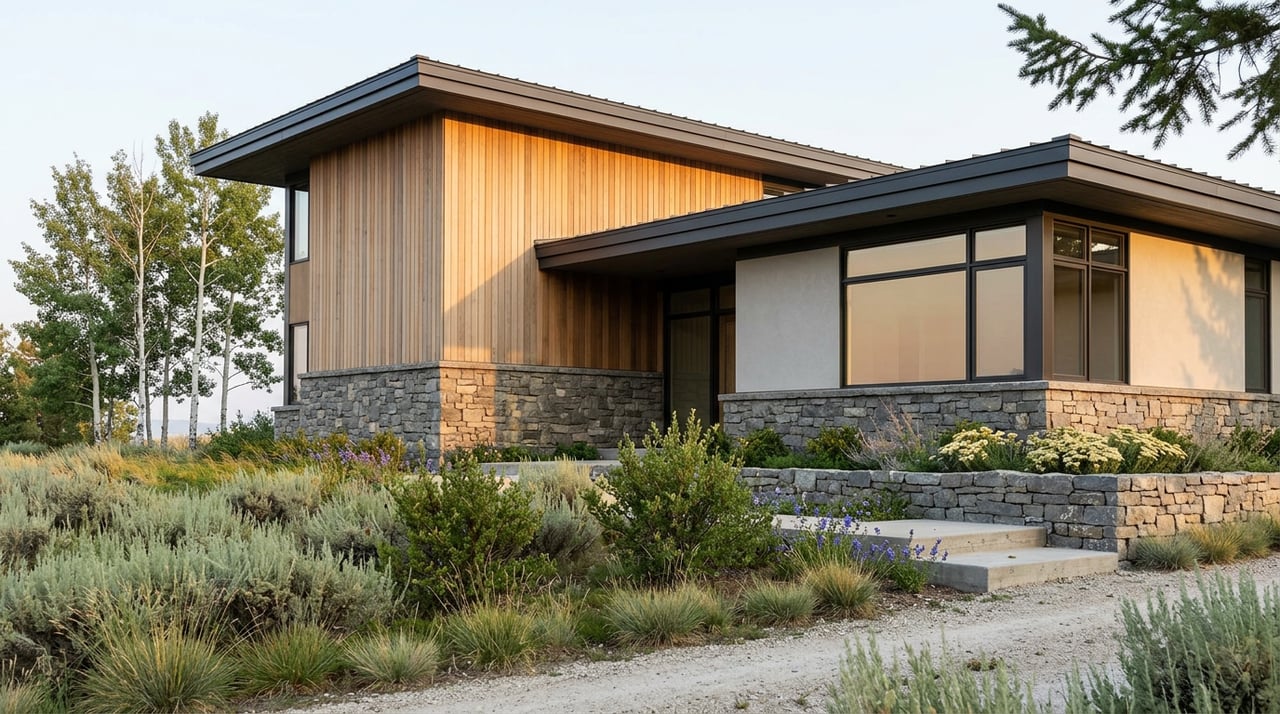
Buyers who reach The Ranches at The Preserve have usually already toured Old Ranch Road, priced out a Promontory homesite, and walked a Silver Creek parcel. By the time they see a 46-acre listing above Glenwild, the acreage line item has become the number they anchor to. It is the wrong number to anchor to.
Acreage at The Ranches is a privacy metric, not a buildable one. Every parcel in the community, whether it is 10 acres or 60, is governed by the same fixed building envelope and the same four-structure allowance. The extra acres buy view protection, setback from neighbors, and quieter wildlife corridors. They do not buy a bigger house, a second barn, or the automatic right to keep horses. Once a buyer internalizes that, the price-per-acre comparisons that dominate the portals start to look like the wrong math.
The constraint the portal listing does not show
The Ranches at The Preserve is a 750-acre gated community of 40 equestrian-zoned lots ranging from 10 to just over 40 acres, sited adjacent to the larger 1,700-acre Preserve above Glenwild Golf Club. On paper it looks like ranch-scale land. In practice it is a highly choreographed development, and the choreography is the point.
Here is what the CC&Rs actually allow on any given parcel:
- One primary residence, 5,000 to 17,500 livable square feet
- One guest house, capped at 35% of the primary or 3,500 square feet, whichever applies
- One caretaker cottage
- One barn
- All four structures must fit inside a single 50,000-square-foot building envelope
- The envelope location must be reviewed and approved by the RATP Design and Land Use Committee
- Equine use is permitted by zoning but requires separate approval from the HOA Board
That last pair is where buyers get surprised. The envelope is roughly 1.15 acres. Buy 10 acres or buy 40, the buildable footprint the committee will let you spread structures across is the same size. The delta is privacy and view, not program.
Extra acreage at The Ranches is best understood as an easement you buy against your future neighbors. It is protection, not permission.
The equine caveat matters just as often. The lots are zoned for horses, which is how they get marketed, but the Design Guidelines require the HOA Board of Directors to sign off on equine use before a barn is stocked. A buyer who wires against a "horse property" listing without confirming the board's current position on stocking rates and pasture management is buying an application, not an approved use.
What the envelope math means for pricing
Once the envelope is fixed, the price-per-acre calculation that works in other Wasatch acreage markets stops behaving. Two lots at the same asking price can carry very different value propositions, and neither has much to do with the raw acre count.
| Lot profile | What the extra acres deliver | What they do not deliver |
|---|---|---|
| 10 to 15 acres | Screening from the road, a defined building pad, HOA-managed viewsheds | Buffer from a future neighbor's envelope on the adjacent lot |
| 20 to 30 acres | Meaningful setback from adjacent envelopes, room for a longer approach drive, better siting options for the DLU Committee | Additional structures beyond the four-building allowance |
| 40 to 60 acres | Genuine visual isolation, standalone equestrian topography, control over the middle-distance view | A larger primary residence than the 17,500 sq ft cap already permits |
The takeaway for a buyer running comps: pay for the acreage that solves a specific problem. If the problem is "I do not want to see a neighbor's roofline from my great room," a 25-acre parcel with a well-placed envelope solves it. If the problem is "I want the option to build a second guest structure or a training arena someday," no amount of additional acreage solves it. The CC&Rs cap the program regardless.
Sellers should be reading the same math in reverse. A 40-acre listing does not automatically justify a premium over a 15-acre listing on the same road. The premium comes from where the envelope sits inside the acreage, what the DLU Committee has already blessed, and what the topography does for the sightlines. Marketing that leads with the raw acre count leaves the actual value driver undocumented.
The Red Hawk road quirk
The internal roads at The Ranches are owned and maintained by the Red Hawk Wildlife Preserve Foundation, which operates as the HOA. They are private, but they connect through the subdivision to public roads on more than one side, and the community shares snow plowing and some services with the adjacent Preserve HOA even though the two developments have separate governing boards.
That through-connection has been formally examined. A 2012 Utah Property Rights Ombudsman advisory opinion, No. 116, addressed a proposed gate at the northwest entrance and set specific design standards for any additional gates: a 36-inch maximum height, a two-foot minimum bottom clearance, an inward-opening requirement, and a "visually open" material standard. The opinion is public and worth reading before an offer, because it constrains what any future HOA action on internal access can look like. It also explains why a buyer touring at the Red Fox gate off Bitner Ranch Road may see cyclists or hikers moving through private road segments during a showing. The access easements are real, and they were adjudicated more than a decade ago.
None of this is a problem. It is a specificity. A buyer who understands the road ownership structure going in will not be surprised by the through-traffic pattern on a Saturday morning, and will price the interior lots accordingly.
Where the Ranches sits in the current market
Q1 2026 was a strong quarter for the Snyderville Basin single-family segment, with 78 closings producing $331.9 million in volume, up 25 percent by volume over Q1 2025 according to the Park City Board of Realtors quarterly summary. Glenwild, the adjacent sub-area that most directly comps The Ranches, recorded five sales averaging $6.3 million each in the same quarter, a 151 percent year-over-year jump in volume off a small base.
The larger Basin ran a 22-day median days-on-market in early 2026. The Preserve and Ranches inventory did not. Active listings across the combined communities were sitting at an average of 181 days on market as of late May 2026, with a $2.775 million median list price and $1,167 per square foot for improved product. One representative Ranches lot at 1655 W Red Hawk Trail, 10.91 acres, was listed at $1.399 million with 41 days on market at that same reading.
That gap between 22 days and 181 days is the transaction-relevant read. The Basin-wide statistics do not describe how The Ranches actually trades. This is a slow, deliberate segment where buyers underwrite the envelope siting, the DLU Committee posture, the equestrian approval status, and the road easements before they write. Sellers who price against Basin averages sit. Sellers who price against the specific comps inside these two gates transact.
What to verify before an offer
A short pre-offer checklist that reflects how these transactions actually close:
- Pull the RATP Design and Land Use Committee file for the specific lot. Confirm whether an envelope has already been sited, and if so, what views and setbacks it captures.
- Confirm current HOA Board posture on equine use for the parcel. A lot zoned equestrian is not the same as a lot approved to stock horses today.
- Review the Red Hawk Wildlife Preserve Foundation road maintenance and easement documents, and cross-reference against the 2012 advisory opinion if any gate or access questions are open.
- Verify well and septic status. Parcels this size sit outside Park City Municipal utility service, so private well capacity and septic siting are part of the buildable envelope conversation, not a post-closing detail.
- Check whether any conservation easements attach to the parcel. Several Ranches and Preserve lots carry them, and they further constrain where the envelope can move.
- Compare against active comps inside the same two gates, not against broader Snyderville Basin medians.
FAQ
Are the equestrian rules the same at The Ranches and The Preserve? No. The two communities share roads and some services but have separate HOAs and separate design guidelines. The Ranches is uniformly equestrian-zoned subject to HOA Board approval for equine use. Only select lots in the adjacent Preserve are zoned for horses.
Can the 50,000 sq ft envelope be moved after purchase? The envelope location is subject to the RATP Design and Land Use Committee. Movement is possible in principle but is a governance question, not a matter of right. Verify current committee posture before assuming a re-siting will be approved.
What is the current lot inventory across The Ranches and The Preserve? Combined active inventory across the two communities read 12 listings as of late May 2026, with a $2.775 million median list price and an average 181 days on market. That is a thin, slow-turning segment relative to the broader Basin.
The value at The Ranches at The Preserve is real. It just does not live in the acre count. If you are working through a specific parcel and want a read on the envelope siting, the comps inside the gates, and how the DLU Committee has treated recent submissions, Timeless Properties can walk the ground with you. Schedule a free consultation and we will structure the underwrite before you write.