If your idea of a mountain retreat includes privacy, acreage, and room to build something truly personal, Stagecoach Estates will likely get your attention fast. It also asks more of you than a typical homesite, because this is a small gated mountain community where land, access, utilities, and design rules all shape what is possible. With the right planning, you can move from a beautiful parcel to a well-executed custom retreat with fewer surprises along the way. Let’s dive in.
Why Stagecoach Estates feels different
Stagecoach Estates is a small legacy mountain community in the Park City area of Summit County, established in 1970. HOA materials describe it as a gated community with roughly 108 to 109 lots, which makes it notably different from a larger tract neighborhood with a more uniform building pattern.
That smaller scale matters when you start planning. In Stagecoach, you are often buying a wooded, sloped parcel of about 10 acres with broad mountain or valley views, not a ready-to-build suburban lot. Your decisions about siting, driveway placement, tree retention, and privacy can have a major impact on the final result.
Start with the lot, not the floor plan
One of the biggest mistakes buyers make with mountain land is falling in love with a house concept before confirming how the site will actually support it. In Stagecoach Estates, the smarter first step is to understand the parcel itself.
You will want to confirm whether the lot already has a defined building envelope, where a driveway can reasonably go, and how slope and vegetation affect both construction and views. A retreat that looks perfect on paper can become far more complex once you account for terrain, setbacks, drainage, and utility routing.
Key lot questions to answer early
- Where is the approved or practical building envelope?
- How steep is the terrain across the likely homesite?
- What kind of driveway alignment makes sense from the road?
- How much tree clearing is realistic while still preserving privacy and landscape character?
- What view corridors are available from the most buildable part of the parcel?
- How will utilities and wastewater be handled on this specific lot?
Know the Stagecoach design limits
Custom does not mean unlimited. Stagecoach Estates has recorded architectural controls that directly affect home size, placement, and accessory features, so it is important to understand those rules before you invest heavily in design work.
The controls allow one single-family dwelling and one driveway per lot, and they do not allow resubdivision. They also require a 70-foot front setback and 60-foot rear and side setbacks, set a 500-square-foot minimum on the main floor, and cap the home at 10,000 square feet total, including basements, livable attics, and garages.
For many buyers, that still leaves substantial flexibility. But on a sloped, wooded parcel, those rules can significantly shape where the house sits and how the structure steps into the land.
Design expectations that influence the look
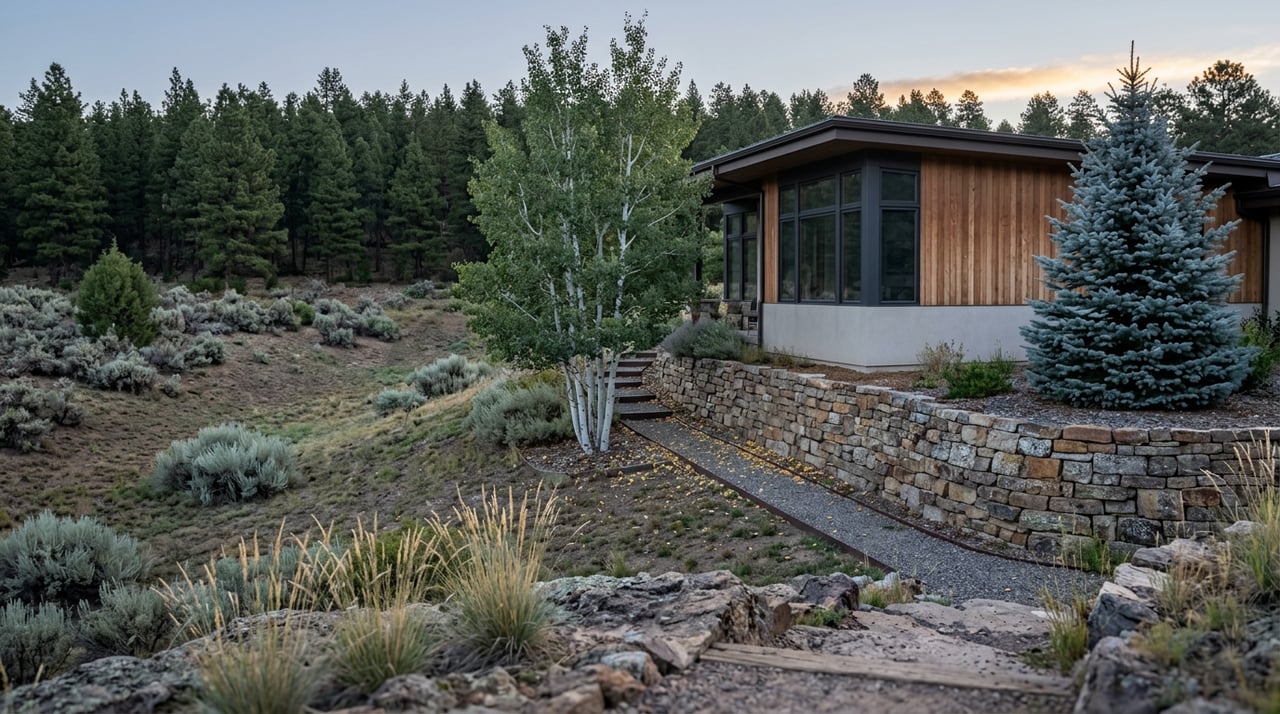
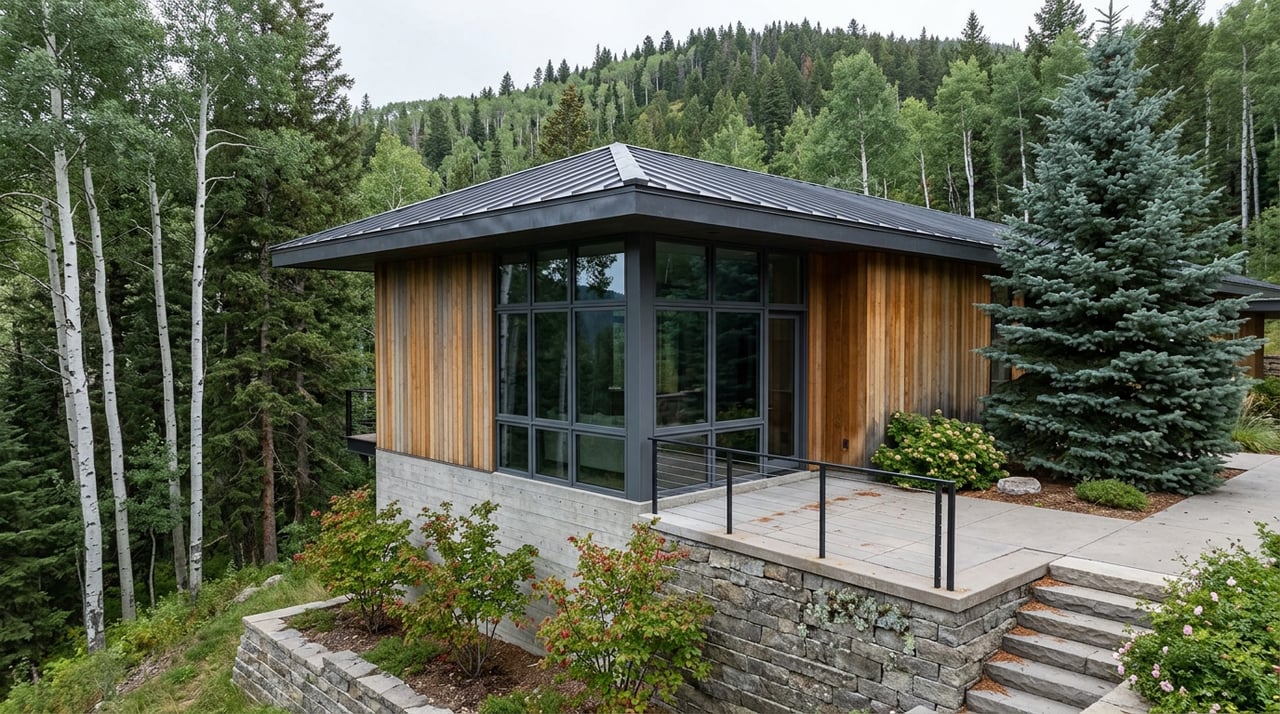
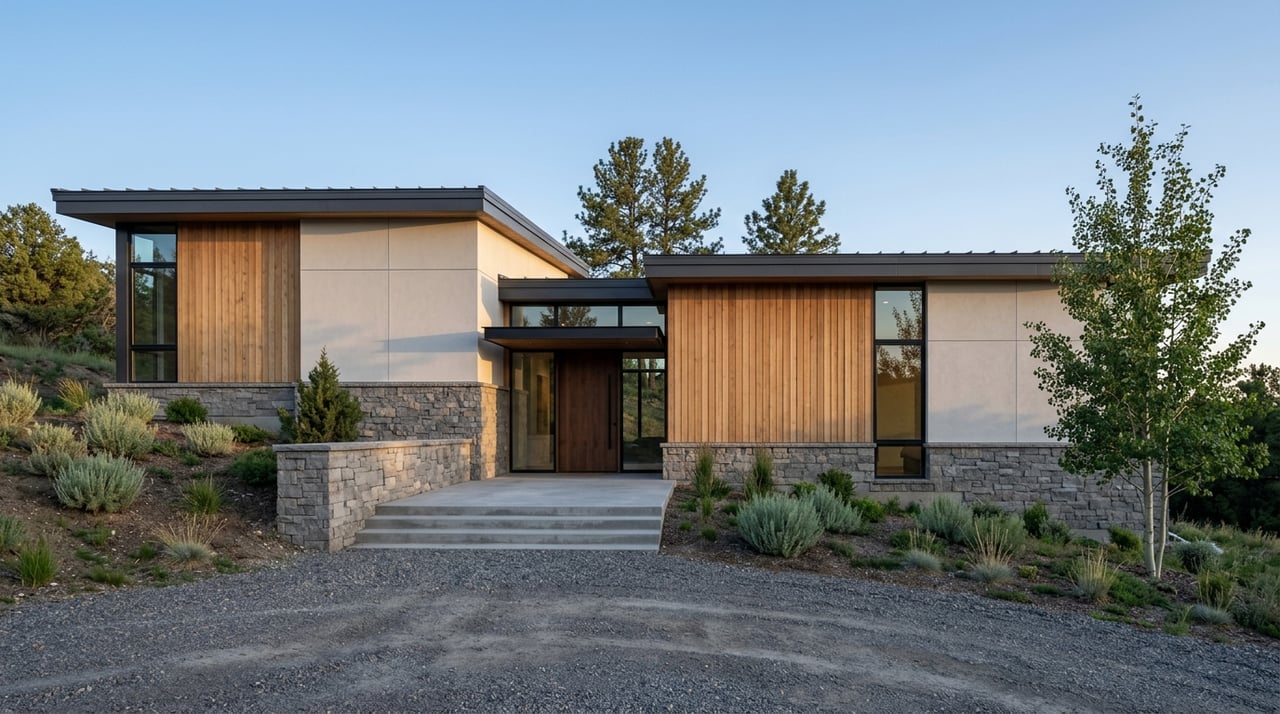
The architectural approach in Stagecoach favors homes that blend into the landscape rather than dominate it. HOA materials point toward neutral exterior colors, structures that tuck into the site, and downward lighting that complies with dark-sky standards.
There are also practical fire-conscious details built into the rules, including spark arrestors and, where appropriate, fire-retardant roofing. If you are imagining storage for trailers, snowmobiles, or ATVs, that may be allowed, but it should be screened from road and neighboring views.
Plan accessory features early
In mountain communities, extra features often become late-stage budget and approval issues. In Stagecoach, that risk is even higher because outbuildings, barns, garages, fences, walls, pools, and many site changes require ACC approval.
Pools have added restrictions tied to visibility and safety, and outbuildings must stay within the building envelope while also meeting county permit requirements. If your retreat vision includes a pool, spa, workshop, detached garage, or expanded accessory program, those items should be part of feasibility planning from the start.
Utilities and wastewater need parcel-by-parcel review
Stagecoach is not the kind of community where you should assume every lot works the same way. The HOA lists Mountain Regional Water District and Rocky Mountain Power as service providers, but bringing utilities from the road to the residence is the owner's responsibility.
The ACC also indicates that utility extensions should generally run along the driveway to reduce landscape disruption. That detail can influence both your driveway design and your early site budget.
Wastewater deserves especially close review. Public listings commonly describe Stagecoach properties as having water and electricity with private septic or septic tanks, so you should verify the setup for the parcel you are considering rather than assume a shared sewer solution.
Remote mountain logistics are part of the plan
Summit County classifies this terrain as Mountain Remote, and that classification comes with real-world implications. County materials note that these areas are not easily serviced and that development should minimize disturbance to the natural environment, fire danger, water supplies, wildlife, viewsheds, and open-space values.
The county also advises buyers to expect limited access, infrastructure, and public services, along with longer emergency response times and possible service gaps. That does not make Stagecoach less appealing. It simply means your retreat should be planned with a realistic understanding of mountain-remote living.
What that can mean for daily use
- Access may be more limited than in an in-town neighborhood.
- Public services may be less consistent.
- Delivery service can be limited, and some homes may need a PO box.
- Construction scheduling may need to account for road conditions and seasons.
- Fire mitigation should be part of both design and ongoing ownership.
Road conditions can affect budget and timing
The HOA says the community has just under 10 miles of roads, and it also describes those roads as fragile. Owners are advised to use 4x4 vehicles and keep speeds below 20 mph.
For anyone building a custom home, that road system matters. The HOA notes that heavy construction traffic is best limited to June through October, which can shape your building schedule, staging strategy, and contractor coordination.
Winter access is another factor to treat seriously. The HOA states that main-road snow plowing is funded by full-time owners and is not guaranteed by the HOA, so winter conditions can be unpredictable.
Wildfire readiness should shape your retreat
A well-designed mountain home should be beautiful, but it should also be practical and resilient. Stagecoach HOA materials point owners toward fire-safe landscaping, and Park City Fire District fire-prevention materials continue to emphasize fuel reduction and wood chipping.
That means wildfire readiness should not be a late checklist item. It should be integrated into how you think about landscaping, defensible space, roof materials where appropriate, and the way your home sits within trees and topography.
Build the right team before design goes too far
In Stagecoach Estates, early coordination is not optional. The ACC process requires a mandatory pre-site meeting, and complete plans can be reviewed in about 30 days once submitted.
The submittal itself is detailed. It asks for the building envelope, topography, driveway, parking, drainage, utilities, roof pitch, exterior materials and colors, and exterior lighting, so it makes sense to assemble your team early.
A strong planning team often includes
- An architect familiar with mountain homes and site-sensitive design
- A builder comfortable with remote access and seasonal construction logistics
- A civil engineer or surveyor
- A landscape or fire-mitigation consultant
Contractors are also expected to carry liability and workers’ compensation insurance, and construction is expected to begin within 12 months of approval. That timeline makes early organization especially important.
A smart planning sequence for buyers
If you are considering a custom retreat in Stagecoach Estates, the clearest path is to make decisions in the right order. This can help you protect both your budget and your timeline.
Recommended planning steps
- Verify the plat, easements, and practical building envelope.
- Confirm utility access and wastewater handling for the parcel.
- Meet with the ACC early through the required pre-site process.
- Finalize site orientation based on views, privacy, slope, and access.
- Develop driveway, drainage, and utility plans together.
- Build a realistic budget that includes fire mitigation, road logistics, and seasonal construction timing.
Why local guidance matters in Stagecoach Estates
A property like this asks for more than a simple land search. You need someone who understands the Park City area, mountain construction realities, gated acreage communities, and the practical questions that affect long-term enjoyment and resale.
That is especially true in a place like Stagecoach Estates, where the value of a parcel is tied not just to acreage or views, but to how well the site can support the retreat you actually want to build. Clear guidance early can help you avoid expensive redesigns, unrealistic assumptions, and delays that could have been anticipated.
If you are exploring land or planning a custom home in Stagecoach Estates, working with a broker who understands local development patterns and mountain-remote constraints can make the process more focused and far less stressful. For tailored guidance on evaluating a parcel or planning your next move, connect with Jake Doilney.
FAQs
What should you verify before buying land in Stagecoach Estates?
- You should confirm the plat, easements, building envelope, driveway feasibility, utility setup, and wastewater handling for the specific parcel before moving into design.
What are the main building rules in Stagecoach Estates?
- Stagecoach Estates allows one single-family dwelling and one driveway per lot, prohibits resubdivision, requires 70-foot front setbacks and 60-foot rear and side setbacks, and caps total home size at 10,000 square feet including basements, livable attics, and garages.
What utilities are available in Stagecoach Estates?
- HOA materials list Mountain Regional Water District and Rocky Mountain Power, but owners are responsible for extending utilities from the road to the residence, typically along the driveway.
How does wastewater work on Stagecoach Estates lots?
- Public listings commonly indicate private septic or septic tanks, so you should verify wastewater handling on a parcel-by-parcel basis rather than assume a uniform sewer system.
What should buyers know about road access in Stagecoach Estates?
- The HOA says the community roads are fragile, 4x4 use is advised, speeds under 20 mph are recommended, heavy construction traffic is best limited to June through October, and winter plowing is not guaranteed by the HOA.
Why is early ACC coordination important in Stagecoach Estates?
- The ACC requires a pre-site meeting and detailed plan review, so early coordination helps you address siting, drainage, driveway alignment, materials, lighting, and accessory features before design work goes too far.